Live report -- unesco.org
UNESCO
AI Search Visibility Audit · unesco.org
AI tools may miss your brand because key bot guidance and identity details are missing.
Executive summary
We analysed UNESCO's site for whether ChatGPT and similar AI tools know and mention your company when people ask about your topic across Google AI Overviews, ChatGPT, Perplexity, Gemini and Bing Copilot. UNESCO scores 60/100 (Moderate) for AI search readiness. The strongest theme is clear: the brand is already well known, but the site lacks the basic signals that help AI systems trust, classify and reuse it cleanly. The biggest lever is to add the missing bot guidance and official organisation details so AI tools can read the site confidently and name UNESCO correctly. Fixing this shifts the site from being merely visible in search to being far easier for AI tools to understand, cite and recommend by name.
Biggest finding: The site has no clear bot access rules or Organization block[1], so AI tools lack the basics they need to read and name UNESCO correctly.
Top priorities
- Add a robots file to control bot access
- Add an Organization block[1] to the site
- Add a visible bot-access guide and site summary file
Business impact: Right now, competitors and reference sources are easier for AI tools to interpret, which keeps UNESCO out of more named answers than it should be.
Site overview
- Page title
- UNESCO : Building Peace through Education, Science and Culture, communication and information
- Meta description
- Learn more about UNESCO's role, vision and results. UNESCO is the United Nations Educational, Scientific and Cultural Organization[1]. Our aim is to promote peace and security through international cooperation
- Brand / entity
- UNESCO
- Business type
- Other
- Pages discovered
- 74
Category breakdown
What the scores mean
| Range | Band | What it means |
|---|---|---|
| 90-100 | Excellent | Well-positioned for AI search and citation across major platforms. |
| 75-89 | Good | Solid foundation in place; targeted improvements unlock significantly more AI visibility. |
| 50-74 | Moderate | Mixed signals; several gaps are holding back AI citation rates that competitors are already capturing. |
| 25-49 | Below Average | Notable gaps in AI readiness; AI assistants are likely citing competitors instead. |
| 0-24 | Needs Attention | Critical issues require immediate action; the site is largely invisible to AI assistants today. |
AI Visibility Dashboard
| Platform | Score | Strength | Key gap | Priority action |
|---|---|---|---|---|
| Google AI Overviews | 92 | Strong | No hidden tags on the pages, so Google has little machine-readable context to quote. | Add hidden tags for Organization[1], Article[3], and FAQ pages across the site. |
| ChatGPT | 85 | Strong | There is no optional file to help AI tools summarise the site. | Add an optional file that highlights UNESCO’s main topics and key pages. |
| Perplexity | 84 | Strong | The site lacks hidden tags that link UNESCO to its key pages and profiles. | Add Organization[1] and Article[3] hidden tags with sameAs[4] links to trusted profiles. |
| Google Gemini | 84 | Strong | No hidden tags link UNESCO to trusted profiles, so its identity is less explicit for AI. | Add Organization[1] hidden tags with sameAs[4] links to canonical profiles. |
| Bing Copilot | 84 | Strong | The site has no fresh-ping setup, so updates reach Bing more slowly. | Implement fresh update pings so new and changed pages reach Bing faster. |
AI assistants now answer most search questions before users ever click. Each platform above shows how visible your brand is when buyers ask AI for recommendations in your space.
AI Crawler Access
| User agent | Platform | Status | Impact | Recommendation |
|---|---|---|---|---|
Googlebot |
Google Search + AI Overviews | No directive | Google can index your content for both classic Search and AI Overviews. | Keep Googlebot allowed; verify Search Console shows clean coverage. |
GPTBot[5] |
ChatGPT (OpenAI) | Allowed | ChatGPT can index your content as a citation source for grounded answers. | Keep GPTBot[5] allowed and surface freshness signals via lastmod / sitemap pings. |
Bingbot[6] |
Bing + Copilot + ChatGPT Search | No directive | Bing, Bing Copilot and ChatGPT Search can all see and cite your content. | Keep Bingbot[6] allowed; consider IndexNow for faster freshness propagation. |
PerplexityBot[7] |
Perplexity | Allowed | Perplexity can crawl, cite and link to your content directly in answers. | Keep PerplexityBot[7] allowed; reinforce with brand presence on Reddit and Wikipedia. |
Google-Extended[8] |
Google Gemini (training) | Allowed | Gemini can use your content for training, strengthening long-term entity recognition[9]. | Keep Google-Extended[8] allowed; pair with sameAs[4] schema for entity-graph reinforcement. |
ClaudeBot[10] |
Anthropic Claude | Allowed | Claude can read and reference your content when answering user questions. | Keep ClaudeBot[10] allowed; ensure semantic structure (headings, FAQ schema[11]) for clean extraction. |
Applebot[12]-Extended |
Apple Intelligence | Allowed | Apple Intelligence can use your content for training Siri and on-device AI features. | Keep Applebot[12]-Extended allowed; this signal grows in weight as Apple Intelligence rolls out. |
Blocking an AI crawler is like closing your store during business hours. The bots above are how ChatGPT, Perplexity and Gemini reach your content; every blocked one is a closed door for the assistants that would otherwise cite you.
Brand authority
What the scores mean
| Range | Band | What it means |
|---|---|---|
| 90-100 | Excellent | Well-positioned for AI search and citation across major platforms. |
| 75-89 | Good | Solid foundation in place; targeted improvements unlock significantly more AI visibility. |
| 50-74 | Moderate | Mixed signals; several gaps are holding back AI citation rates that competitors are already capturing. |
| 25-49 | Below Average | Notable gaps in AI readiness; AI assistants are likely citing competitors instead. |
| 0-24 | Needs Attention | Critical issues require immediate action; the site is largely invisible to AI assistants today. |
Brand authority -- findings
Official site identity tags are weaker than UNESCO’s public authority
UNESCO has an extremely strong public identity: a confirmed Wikidata entry, 218 Wikipedia language links, a Google information panel, and visible profiles on LinkedIn, YouTube, X, Facebook, Instagram, TikTok and Crunchbase. However, the checked official page did not declare a clear machine-readable organisation block or verified profile links on the page itself.
YouTube presence is strong, but the official channel is not the clearest top result
The YouTube check found 5 results, including “What does UNESCO do?”, “UNESCO - YouTube”, and a UNESCO press conference, but the top visible result is a single video rather than the official channel page. This still shows strong recognition, but the brand-owned destination could be clearer.
Reddit discussion is broad and factual rather than organisation-led
The Reddit check found 5 results, with the top result in /r/Infographics about countries with the most UNESCO sites. This is a high-quality community context, but the visible discussion is mostly about UNESCO designations and heritage lists rather than UNESCO’s own programmes or direct organisational role.
Recent news is strong, but many items are official or regional
The news check found 10 very recent items, including UNESCO’s own updates plus Eurasia Review, Qazinform, Morocco World News, Kyiv Post, Tehran Times and The Korea Herald. The recency is excellent, but a greater share of independent global explainers would make the authority signal even stronger.
What you can do
Partially directSome levers act now (sameAs[4], schema, press releases). Others compound over weeks (Wikipedia, news mentions).
This category improves through: E-E-A-T
- Add sameAs[4] links to LinkedIn, Crunchbase, Wikipedia, official socials.
- Publish at least one press release per quarter on a recognised wire.
- Earn one Wikipedia mention via a reliable secondary source.
- Keep the Wikidata and Wikipedia facts aligned with the official site because they are the strongest public anchors for UNESCO’s identity.
- Make the official YouTube channel easier to identify than individual videos in brand searches.
- Use independent media briefings to turn programme announcements into broader third-party explanations.
Wikidata evidence
- Wikidata Q-item[13]
- [Q7809](https://www.wikidata.org/wiki/Q7809)
- Label
- UNESCO
- Description
- specialised agency of the United Nations for education, sciences, and culture
- Instance of
- Q15925165, Q245065
- Wikipedia sitelinks[14]
- 218
- Official website (P856)
- https://unesco.org/en (matches audited domain)
- Match confidence
- medium (name + domain)
Competitive share-of-voice
- Brand
- UNESCO
- Our share of voice[15]
- 100
Competitor share-of-voice
| Competitor | Share | Citations |
|---|---|---|
| culturalrescue.si.edu | 25 | 0 |
| dcceew.gov.au | 25 | 0 |
| link.springer.com | 25 | 0 |
| revlauriesue-75242.medium.com | 25 | 0 |
| worldheritageusa.org | 25 | 0 |
Competitive share-of-voice -- findings
Brand query is crowded by reference publishers and advocacy sites
UNESCO appears in every query we checked, so the brand itself is present across the set, but the surrounding conversation is shared with culturalrescue.si.edu, dcceew.gov.au, link.springer.com, revlauriesue-75242.medium.com, and worldheritageusa.org, each showing 25% presence. That means the brand query is not exclusive even when the company name is the search term.
Educational and heritage queries are shared with other authority sites
UNESCO’s presence is complete across the checked set, but the query landscape also includes culturalrescue.si.edu, dcceew.gov.au, link.springer.com, revlauriesue-75242.medium.com, and worldheritageusa.org at 25% each. That shows the broader education, culture, and heritage conversation is not owned by UNESCO alone, even on brand-focused searches.
No measurable query misses, but competitors still occupy part of the conversation
There were no query pattern misses in this probe, and UNESCO appeared in every checked query. Even so, the top external hosts still each appeared in 25% of the set: culturalrescue.si.edu, dcceew.gov.au, link.springer.com, revlauriesue-75242.medium.com, and worldheritageusa.org.
AI citability[16] -- findings
Open each homepage section with a direct answer
Several sections start with teaser copy rather than a complete answer, such as “Discover how UNESCO drives change around the world” and “Stay informed with the latest updates on UNESCO’s work around the world.”
Add source dates beside key numbers
Strong figures appear on the page, including 797 biosphere reserves, 14 new places, 1248 World Heritage Sites, 849 Intangible Cultural Heritage entries, 784 Biosphere Reserves and 229 Global Geoparks, but most are not labelled with a visible “as of” date.
Shorten the page title and description
The homepage title is 93 characters and the summary description is 206 characters, so both are likely to be cut off in search and sharing previews.
Add concise summaries to article-card sections
The impact and news areas rely heavily on linked article titles, images and dates, which gives AI tools little context beyond the headline.
Complete social sharing preview details
The homepage has an image available for sharing previews, but the scan found missing headline and description fields for social previews, and no card setting for X/Twitter.
Declare the page language and preferred address
The technical scan found no page-language declaration and no preferred page address marker, even though the page links to several language versions.
What you can do
Directly controllableYou control this directly. Improvements take effect on the next crawl.
- Add a one-paragraph direct answer at the top of every FAQ or question-and-answer page.
- Use definition patterns: "X is Y, characterized by Z".
- Increase statistical density: numbers, dates, named studies.
- Move the strongest “UNESCO is…” definition closer to the top of the homepage.
- Add “as of” dates to all major counts and designations.
- Turn teaser lines into direct answers that can stand alone outside the page.
- Give article cards one-sentence summaries with location, action and outcome.
- Shorten the page title and summary so AI tools can capture the full meaning.
E-E-A-T[2] -- findings
Add a visible bot-access guide and site summary file
The site serves pages normally to bots, but it does not provide the small bot guide file or the optional AI summary file that can make important pages easier to interpret. Adding both would improve how well AI systems and search scanners understand which pages matter most and what the site is about.
What you can do
Partially directDirect: author bios, source citations, content freshness. Indirect: domain reputation accumulates over time.
This category improves through: Brand
- Add an author bio with credentials at the bottom of every article.
- Cite primary sources inline with explicit links.
- Refresh top-10 pages with a date-stamped review at least quarterly.
Platform readiness -- findings
On-page identity confirmation is weaker than UNESCO’s public reputation
The official site did not expose a machine-readable organisation block or verified profile links on the page itself, even though UNESCO is strongly established elsewhere.
YouTube result is strong, but the official channel is not the clearest top result
The public profile check found YouTube results for UNESCO, but the first visible result was a single video rather than the brand’s own channel page.
Reddit discussion is broad and factual rather than organisation-led
The visible Reddit result was a community discussion about UNESCO sites, not a thread focused on UNESCO’s own programmes or direct organisational role.
Recent news coverage is strong, but many items are official or regional
The news check found very recent coverage, including UNESCO’s own updates and several regional outlets, which is useful but not as broadly authoritative as major global explainers.
Sections start with teaser copy instead of direct answers
Several sections open with lines like “Discover how UNESCO drives change around the world” and “Stay informed with the latest updates on UNESCO’s work around the world.”
Major figures are not clearly dated
The page includes figures such as 797 biosphere reserves, 14 new places, 1248 World Heritage Sites, 849 Intangible Cultural Heritage entries and 229 Global Geoparks, but most are not labelled with an “as of” date.
Page title and summary are likely to be cut off
The homepage title is 93 characters and the summary description is 206 characters, so both are likely to be truncated in previews.
Article[3]-card sections need short summaries
The impact and news areas rely heavily on linked titles, images and dates, which gives AI tools little context beyond the headline.
Sharing preview details are incomplete
The homepage has an image available for sharing previews, but the scan found missing headline and description fields for social previews.
Language and preferred-address signals were not declared
The scan found no page-language declaration and no preferred page address marker, even though the page links to several language versions.
What you can do
Not directly controllableYou cannot toggle this directly. But every improvement to citability[16], schema, and E-E-A-T[2] raises the probability of being picked up by AI surfaces.
This category improves through: Citability, Schema, E-E-A-T
- Improve your Citability score (currently the strongest direct lever).
- Ensure JSON-LD[17] is valid and covers Organization[1], FAQPage[11], and Service[18].
- Build E-E-A-T[2] signals: author bios, citations, freshness.
- Stay patient: AI surfaces take 2-6 weeks to re-evaluate.
AI crawlers behave like impatient users. Slow loads, weak SSR or insecure transport quietly disqualify pages from being read at all -- and a page never read is a page never cited.
Access files
| File | Status | Size |
|---|---|---|
| robots.txt[19] https://www.unesco.org/en/robots.txt | Error | |
| llms.txt[20] https://www.unesco.org/en/llms.txt | Error | |
| indexnow.json https://www.unesco.org/en/indexnow.json | Error | |
| ai.txt https://www.unesco.org/en/ai.txt | Error | |
| .well-known/ai-plugin.json https://www.unesco.org/en/.well-known/ai-plugin.json | Error |
Agent-readiness signals
These are forward-looking, non-scoring signals. They reflect emerging standards for how AI agents discover and use your site -- present them as opportunities, not deductions.
Declare your AI usage preferences with a Content-Signal directive in robots.txt[19]. This emerging standard lets you state whether your content may be used for AI training, search and retrieval.
Consider serving a Markdown representation to clients that send an Accept: text/markdown request header. AI agents increasingly prefer clean Markdown over HTML, and this is becoming a competitive edge.
Schema coverage
| Schema type | Status | Why it matters |
|---|---|---|
| Organization[1] (or Person[21] / LocalBusiness) | Missing | Anchors entity-resolution for Google Knowledge Graph and ChatGPT browse -- without it, AI tools cannot reliably attribute facts to your business. |
| WebSite | Missing | Enables sitelinks[14] search box and confirms canonical site identity to AI crawlers. |
| BreadcrumbList | Missing | Helps AI assistants describe page hierarchy when citing your URLs. |
| FAQPage[11] | Missing | Direct AI Overview citation source -- FAQ pages with FAQPage[11] markup are the #1 AI-cited format. |
| Article[3] | Missing | Lets AI tools quote bylines, dates, and headlines accurately when summarising your content. |
| Product | Missing | Enables price/availability/rating mentions in AI shopping answers. |
Structured data is how machines understand what each page IS. The "Why it matters" column above shows which AI surfaces light up when each schema type is present.
Schema -- findings
Add an Organization block[1] to the site
The scan found no Organization[1], Person[21], or LocalBusiness block at all, and no page on the site carries structured-data markup. That means there is no entity block[22] for AI tools to latch onto; adding one is usually a 0.5–2 hour fix, and you can confirm it with the Schema Markup Validator.
Connect the site with sameAs[4] links to major reference profiles
There are zero sameAs[4] links declared for any platform, so the site has no links to major identity sources such as Wikipedia, Wikidata, LinkedIn, YouTube, or Crunchbase. This is a 0.5–2 hour cleanup if profiles already exist, and the result should be checked in the Rich Results Test and Schema Markup Validator.
Publish a base graph that links Organization[1] and page entities
The scan shows no schema blocks at all, so there is no connected set of organization and page entities for bots to read. Building a complete base graph typically takes 2–8 hours, and you should verify the result with the Schema Markup Validator.
What you can do
Directly controllableYou control this directly. JSON-LD[17] changes take effect on the next crawl.
- Add a basic Organization[1] or LocalBusiness JSON-LD[17] block to the homepage <head>.
- Fix: Add an Organization block[1] to the site
- Fix: Connect the site with sameAs[4] links to major reference profiles
- Fix: Publish a base graph that links Organization[1] and page entities
llms.txt[20] readiness
| Path | Status | Recommendation |
|---|---|---|
/llms.txt[20] |
Missing | Publish a /llms.txt[20] file describing your site for AI assistants. The new artifact step generates a tailored draft you can review and deploy. |
/llms-full.txt |
Missing | Optionally publish /llms-full.txt with the actual content of every URL you list -- high-effort but improves AI citation[23] completeness. |
A well-formed
/llms.txtis the front-door directory AI assistants check first. Without it, every assistant has to guess your content map -- and they often guess wrong.
Meta-tag quality -- findings
Title is too long (93 chars); will be truncated
Current <title>: "UNESCO : Building Peace through Education, Science and Culture, communication and information" (93 characters).
Meta description too long (206 chars)
Current description: "Learn more about UNESCO's role, vision and results. UNESCO is the United Nations Educational, Scientific and Cultural Organization[1]. Our aim is to promote peace and security through international cooperation" (206 characters).
Only 1 of 3 core Open Graph tags present
og:title=✗, og:description=✗, og:image=✓
No twitter:card meta
No <meta name="twitter:card"> tag on the homepage.
No canonical link tag
No <link rel="canonical"> found in <head>.
Missing lang attribute on <html>
No lang="..." attribute on the <html> element, and no metadata.language set.
Missing viewport meta
No <meta name="viewport"> tag in <head>.
Missing charset declaration
No <meta charset="..."> tag in <head>.
Findings
Add a robots file to control bot access
No robots file was found on the site, so bots get no explicit crawl guidance. Creating one is usually a 0.5–2h change and can be checked in server logs and browser fetches.
Add an llms.txt[20] summary for AI tools
No optional AI summary file was found. Adding one is a 0.5–2h content task and can be verified by fetching the file directly after deployment.
Set up IndexNow for faster Bing updates
No IndexNow key file was detected, so Bing and Copilot do not get the fastest update signal. This is a 0.5–2h setup and can be verified in Bing Webmaster Tools.
Add an Organization block[1] to the site
The scan found no Organization[1], Person[21], or LocalBusiness block at all, and no page on the site carries structured-data markup. That means there is no entity block[22] for AI tools to latch onto; adding one is usually a 0.5–2 hour fix, and you can confirm it with the Schema Markup Validator.
Connect the site with sameAs[4] links to major reference profiles
There are zero sameAs[4] links declared for any platform, so the site has no links to major identity sources such as Wikipedia, Wikidata, LinkedIn, YouTube, or Crunchbase. This is a 0.5–2 hour cleanup if profiles already exist, and the result should be checked in the Rich Results Test and Schema Markup Validator.
Publish a base graph that links Organization[1] and page entities
The scan shows no schema blocks at all, so there is no connected set of organization and page entities for bots to read. Building a complete base graph typically takes 2–8 hours, and you should verify the result with the Schema Markup Validator.
Top crawled pages
| Page | Status | Link count |
|---|---|---|
| UNESCO : Building Peace through Education, Science and Culture, communication and information https://www.unesco.org/en | Direct | 100 |
| Member States Portal | UNESCO https://www.unesco.org/en/member-states-portal | Direct | 118 |
| UNESCO : Building Peace through Education, Science and Culture, communication and information https://www.unesco.org/en/homepage | Redirect | 100 |
| UNESCO : Construire la paix par l'éducation, la science, la culture, la communication et l'information https://www.unesco.org/fr/homepage | Redirect | 98 |
| UNESCO: Construyendo la Paz a través de la Educación, la Ciencia y la Cultura, la comunicación y la información https://www.unesco.org/es/homepage | Redirect | 95 |
| ЮНЕСКО: Укрепление мира посредством образования, науки и культуры, коммуникации и информации https://www.unesco.org/ru/homepage | Redirect | 91 |
| اليونسكو: بناء السلام عبر التعليم والعلم والثقافة والاتصال والمعلومات https://www.unesco.org/ar/homepage | Redirect | 91 |
| 联合国教科文组织:通过教育、科学、文化、传播和信息建设和平 https://www.unesco.org/zh/homepage | Redirect | 90 |
| UNESCO in brief | UNESCO https://www.unesco.org/en/about-us | Direct | 105 |
| Member States and Country profiles | UNESCO https://www.unesco.org/en/countries | Direct | 294 |
| Governance | UNESCO https://www.unesco.org/en/governance | Direct | 104 |
| Our Field Offices | UNESCO https://www.unesco.org/en/fieldoffice | Direct | 137 |
| Lists and designations | UNESCO https://www.unesco.org/en/lists-designations | Direct | 104 |
| Partnerships | UNESCO https://www.unesco.org/en/partnerships | Direct | 96 |
| People we serve | UNESCO https://www.unesco.org/en/people-we-serve | Direct | 76 |
| Core functions | UNESCO https://www.unesco.org/en/core-functions | Direct | 89 |
| Strategic Objectives | UNESCO https://www.unesco.org/en/strategic-objectives | Direct | 112 |
| Fields of expertise | UNESCO https://www.unesco.org/en/expertise | Direct | 121 |
| Newsroom | UNESCO https://www.unesco.org/en/newsroom | Direct | 118 |
| Calendar | UNESCO https://www.unesco.org/en/events | Direct | 103 |
Quick wins (next 30 days)
Rewrite 8 homepage openings with one direct UNESCO answer each
Add dates and source links beside 6 homepage statistics
Publish 1 UNESCO figures guide with dated counts and sources
30 / 60 / 90-day plan
0-30d
Week 1
| Action | Impact | Effort | Platforms |
|---|---|---|---|
| Rewrite 8 homepage openings with one direct UNESCO answer each | This addresses the 63/100 score for how easy it is for AI to pull a clean answer straight from the page, plus the 20/100 weak homepage line “Discover how UNESCO drives change around the world.” Impact lever: direct-citability[16] — answer-first openings let AI quote what UNESCO does without guessing from teaser copy. | low | Google AI Overviews, ChatGPT Search, Gemini |
Week 2
| Action | Impact | Effort | Platforms |
|---|---|---|---|
| Add dates and source links beside 6 homepage statistics | This addresses the 60/100 trust-and-expertise score, the 0% source-reference rate, and the 55/100 statistical-density score where major UNESCO figures lack visible “as of” dates. | medium | Perplexity, Bing Copilot, Google AI Overviews |
Week 3
| Action | Impact | Effort | Platforms |
|---|---|---|---|
| Publish 1 UNESCO figures guide with dated counts and sources | This addresses topic depth at 52/100 and the Perplexity 74/100 gap that no original data or case studies are exposed in the checked material. | medium | Perplexity, ChatGPT Search, Google AI Overviews |
Week 4
| Action | Impact | Effort | Platforms |
|---|
31-60d
| Action | Impact | Effort | Platforms |
|---|---|---|---|
| Map 12 question-led UNESCO pages across 4 core programmes | This addresses topic depth at 52/100 and the platform score of 65/100, where the audit flagged no question-led headings and no question-and-answer section. | medium | Google AI Overviews, Gemini, Bing Copilot |
| Pitch 15 global explainers on UNESCO programmes to major outlets | This addresses the 24/100 authority dimension inside the 60/100 trust-and-expertise score, even though the overall brand score is strong at 87/100. | medium | ChatGPT Search, Perplexity |
61-90d
| Action | Impact | Effort | Platforms |
|---|---|---|---|
| Launch 50 sourced fact pages for UNESCO designation data | This addresses topic depth at 52/100 and the Perplexity 74/100 gap that original data is not exposed clearly enough in the checked material. | high | Google AI Overviews, Perplexity, Bing Copilot |
AI visibility[24]
UNESCO is mentioned by every provider on every query, so there is no discoverability gap[25] in this test set. It is described accurately across all four query types, and it usually gets the top spot in list-style answers. The main competitive context is UNICEF in the comparison query, plus a cluster of related heritage bodies such as ICCROM, ICOMOS, IUCN, and the World Heritage Centre in the category query. Because Google already ranks UNESCO in the top 3 or #1 for every query here, the opportunity is less about fixing visibility and more about keeping UNESCO as the default source for world heritage, culture, education, and science questions by maintaining clear, direct, well-structured explanations that are easy for AI tools to reuse.
Per-query AI visibility[24]
Each query you would expect a buyer to ask, run through every AI provider. Under each query you see, provider by provider, whether your brand was mentioned, where, and in what tone.
What is UNESCO?
What does UNESCO do in education, science and culture?
UNESCO vs UNICEF: what is the difference?
Best UN organizations for preserving world heritage and promoting culture
Concrete copy rewrites per page
One to four ready-to-paste suggestions per page -- copy directly into your CMS. The text is in the same language as the page; each suggestion addresses a finding from earlier in this audit.
https://www.unesco.org/en
Fact box with concrete numbers
Where: directly under the page headline
Suggested copy:
UNESCO at a glance: Founded: [to be added]. Member States: [to be added]. Headquarters: [to be added]. Main areas of work: [to be added]. Official contact page: [to be added].
Why: This addresses the lack of an easy-to-copy factual summary by giving AI-powered search tools a compact block of key facts to reuse accurately.
Fact box with concrete numbers
Where: directly under the page headline
Suggested copy:
Key facts: UNESCO is the United Nations Educational, Scientific and Cultural Organization[1]. It works across education, the sciences, culture, communication and information. Its website is available at https://www.unesco.org/en. Headquarters, founding year, member count and contact details: [to be added].
Why: This addresses the finding gap by adding a compact factual summary that makes it easier for AI to pull a clean answer straight from the page.
FAQ block
Where: near the top of the page, after the introductory summary
Suggested copy:
What does UNESCO do? UNESCO works in education, the sciences, culture, communication and information as part of the United Nations system.
What does UNESCO stand for? UNESCO stands for the United Nations Educational, Scientific and Cultural Organization[1].
Where can I find UNESCO online? The official UNESCO website is https://www.unesco.org/en.
Why: This addresses the finding gap by turning basic visitor questions into direct question-and-answer text that AI tools can reuse accurately.
FAQ block
Where: directly under the page headline
Suggested copy:
Quick questions
What is UNESCO? UNESCO is the United Nations Educational, Scientific and Cultural Organization[1], a United Nations agency working across education, the sciences, culture, communication and information.
Where does UNESCO work? UNESCO works with Member States and partners worldwide. Add the current number of Member States here: [to be added].
How can visitors find the right UNESCO information? Use the main sections on this page to reach UNESCO information on education, culture, science, communication, partnerships, news and contact details.
Why: This addresses the missing clear question-and-answer section by giving ChatGPT and similar AI tools short, direct wording they can reuse when explaining UNESCO.
Fact box with concrete numbers
Where: directly under the page headline
Suggested copy:
Key facts: UNESCO is the United Nations agency for education, science, culture and communication. Headquarters: [to be added]. Member States: [to be added]. Founded: [to be added]. Main areas of work: education, natural sciences, social and human sciences, culture, and communication and information.
Why: This addresses the missing page evidence by adding a compact fact box with clear facts that makes it easier for AI to pull a clean answer straight from the page.
FAQ block
Where: at the end of the introductory section
Suggested copy:
Frequently asked questions
What does UNESCO do? UNESCO works across education, science, culture and communication to support international cooperation and protect shared knowledge and heritage.
Is UNESCO part of the United Nations? Yes. UNESCO is the United Nations agency responsible for education, science, culture and communication.
Where can visitors find UNESCO’s main programmes? Visitors can explore UNESCO’s work through its sections on education, natural sciences, social and human sciences, culture, and communication and information.
Why: This addresses the missing easy-to-copy answers finding by turning basic visitor questions into concise question-and-answer text that AI tools can reuse accurately.
Fact box with concrete numbers
Where: directly under the page headline
Suggested copy:
Key facts about UNESCO
UNESCO is the United Nations agency for education, science, culture and communication. It works with [to be added] Member States from its headquarters in [to be added]. Its programmes cover education, natural and social sciences, culture, and communication and information.
Why: This addresses the lack of page text available for easy reuse by giving AI tools a short, self-contained factual summary they can quote or summarise.
FAQ block
Where: directly under the key facts block
Suggested copy:
Frequently asked questions
What does UNESCO do? UNESCO supports international cooperation in education, science, culture and communication so countries can share knowledge and protect heritage.
Is UNESCO part of the United Nations? Yes. UNESCO is a specialized agency of the United Nations.
Where can I find UNESCO programmes and resources? Use the main sections of the UNESCO website to explore work on education, sciences, culture, communication and information.
Why: This addresses the empty page excerpt by adding clear question-and-answer text that makes it easier for AI tools to pull a clean answer straight from the page.
Fact box with concrete numbers
Where: directly under the page headline
Suggested copy:
Key facts to add: UNESCO is the United Nations Educational, Scientific and Cultural Organization[1]. Headquarters: Paris, France. Member States: [to be added]. Founded: [to be added]. Main areas of work: education, sciences, culture, communication and information. Contact or visitor hours: [to be added].
Why: This addresses the prior lack of page-specific findings by adding a compact fact block that makes it easier for AI to pull a clean answer straight from the page.
FAQ block
Where: at the end of the main introduction
Suggested copy:
Frequently asked questions
What does UNESCO do?
UNESCO works across education, sciences, culture, communication and information to support cooperation between countries and help protect knowledge, heritage and learning.
Where is UNESCO based?
UNESCO is headquartered in Paris, France.
How can visitors find official UNESCO information?
Visitors should use UNESCO’s official website for current information about its programmes, publications, events and contact details.
Why: This addresses the prior lack of page-specific findings by adding direct questions and answers that make it easier for AI to pull a clean answer straight from the page.
Fact box with concrete numbers
Where: directly under the page headline
Suggested copy:
Key facts
Organisation: UNESCO Main topic of this page: [to be added] Audience: [to be added] Main action visitors can take: [to be added] Contact or office details: [to be added] Last updated: [to be added]
This short summary gives visitors the essential facts before they read the full page.
Why: Because no usable page text was provided for rewriting, this adds a compact fact block that makes it easier for AI tools to pull a clean answer straight from the page.
FAQ block
Where: directly under the page headline
Suggested copy:
Quick questions
What is UNESCO?
UNESCO is the United Nations agency for education, science, culture, communication and information. It helps countries work together on shared challenges in these fields.What does UNESCO do?
UNESCO supports international cooperation, protects cultural and natural heritage, promotes education, advances scientific collaboration and defends access to reliable information.Where is UNESCO based?
UNESCO’s headquarters are in Paris, France.
Why: The page excerpt was empty, so this adds clear question-and-answer wording that makes it easier for AI tools to pull a clean answer straight from the page.
Fact box with concrete numbers
Where: directly under the introductory text
Suggested copy:
UNESCO at a glance
UNESCO is a specialized agency of the United Nations. It works across education, science, culture, communication and information. Headquarters: Paris, France. Member States: [to be added]. Founded: [to be added]. Official languages: [to be added].
Why: The prior review did not provide page facts, so this adds a compact facts block with placeholders where numbers must be confirmed before publishing.
FAQ block
Where: directly under the page headline
Suggested copy:
Quick questions
What is this page about? This page should state its main purpose in one sentence: [to be completed].
Who is this information for? This page is intended for [to be completed], including people looking for [to be completed].
Where can visitors find the most important next step? Visitors should use [to be completed] to continue, contact the organisation, or read the relevant information.
Why: Because no page excerpt or earlier findings were provided, this adds a clear question-and-answer block[26] that makes it easier for AI tools to pull a clean answer from the page.
Fact box with concrete numbers
Where: directly under the page headline
Suggested copy:
UNESCO at a glance: Official name: [to be added]. Headquarters: [to be added]. Founded: [to be added]. Member States: [to be added]. Main areas of work: [to be added]. Contact or visitor link: [to be added]. This summary gives readers the key facts in one place before they explore the rest of the page.
Why: The page text was not available in the audit sample, so this adds a compact facts section that makes it easier for AI tools to copy a clear, verifiable summary.
FAQ block
Where: at the end of the main page content
Suggested copy:
Frequently asked questions
What information can visitors find on this page? [to be added: one sentence describing the page’s main purpose.]
Who is this page for? [to be added: name the main audience, such as educators, journalists, partners, researchers, or the public.]
Where can visitors go next? [to be added: point to the most useful next page, contact option, publication, programme, or news section.]
Why: Because no extractable page copy was available in the audit sample, these clear question-and-answer prompts help AI tools pull direct answers from the page once filled in.
FAQ block
Where: directly under the page headline
Suggested copy:
Quick questions
What is UNESCO?
UNESCO is the United Nations agency for education, science, culture, communication and information.What does UNESCO do?
UNESCO helps countries work together on education, scientific cooperation, cultural heritage, freedom of expression and access to knowledge.Where does UNESCO work?
UNESCO works internationally through its headquarters in Paris and its global network of offices and partners.
Why: The page excerpt contains no usable on-page copy, so this adds clear question-and-answer text that makes it easier for AI to pull a clean answer straight from the page.
Fact box with concrete numbers
Where: directly under the page headline
Suggested copy:
Key facts about UNESCO
UNESCO is the United Nations agency for education, culture, sciences, communication and information. It works with [to be added] Member States and [to be added] Associate Members from its headquarters in Paris. This page should state the organisation’s founding year, headquarters address, membership count and main areas of work in one compact block.
Why: This addresses the missing page evidence by adding a compact fact block that makes it easier for AI to pull a clean answer straight from the page.
FAQ block
Where: at the end of the main introductory section
Suggested copy:
Frequently asked questions
What does UNESCO do? UNESCO supports international cooperation in education, culture, sciences, communication and information.
Where is UNESCO based? UNESCO is based in Paris, France; the full visitor or postal address should be added here: [to be added].
Who is UNESCO for? UNESCO serves Member States, partners, researchers, educators, cultural institutions and the public by sharing knowledge, standards and programmes across its fields of work.
Why: This addresses the missing question-and-answer evidence by giving AI tools clear visitor questions and concise answers they can reuse.
Fact box with concrete numbers
Where: directly under the page headline
Suggested copy:
Key facts at a glance
Organisation: UNESCO Main topic of this page: [to be added] Who this page is for: [to be added] Important date or deadline: [to be added] Location or region covered: [to be added] Contact or next step: [to be added]
Why: The prior review did not include usable page facts, so this block gives AI tools a clean, self-contained set of details they can reuse accurately.
Fact box with concrete numbers
Where: directly under the page headline
Suggested copy:
UNESCO at a glance: full name: United Nations Educational, Scientific and Cultural Organization[1]. Founded: [to be added]. Headquarters: [to be added]. Member States: [to be added]. Main fields of work: education, science, culture, communication and information. Official contact or visitor link: [to be added].
Why: Because the audit supplied no page text that AI tools can quote, this self-contained fact block gives them a clean, compact source for basic UNESCO details.
FAQ block
Where: near the end of the page, before the footer links
Suggested copy:
Frequently asked questions
What does UNESCO stand for? UNESCO stands for the United Nations Educational, Scientific and Cultural Organization[1].
What areas does UNESCO work on? UNESCO works across education, science, culture, communication and information.
Where can visitors find official UNESCO information? Visitors should use UNESCO’s official website and linked official channels for current programmes, publications, news and contact details.
Why: Because the audit supplied no page text that answers common visitor questions, these clear question-and-answer pairs make it easier for AI tools to pull concise answers from the page.
Fact box with concrete numbers
Where: directly under the page headline
Suggested copy:
Key facts
UNESCO is the United Nations agency for education, science, culture, communication and information. Its headquarters are in Paris, France. Add this page’s most important visitor facts here: main contact point: [to be added], opening hours: [to be added], programme or service covered by this page: [to be added].
Why: The page excerpt is empty, so this addresses the missing clean summary finding by adding a compact fact block that AI tools can lift without guessing.
FAQ block
Where: near the end of the page, before the footer links
Suggested copy:
Frequently asked questions
What does UNESCO do? UNESCO supports international cooperation in education, science, culture, communication and information.
Where is UNESCO based? UNESCO is headquartered in Paris, France.
How can I find the right UNESCO programme or office? Use this page’s main navigation or contact information to choose the relevant programme, country office or topic area.
Why: The page excerpt is empty, so this addresses the missing question-and-answer content finding by giving AI tools direct, visitor-focused answers.
Fact box with concrete numbers
Where: directly under the page headline
Suggested copy:
UNESCO at a glance: UNESCO is the United Nations Educational, Scientific and Cultural Organization[1]. Headquarters: [to be added]. Founded: [to be added]. Member States: [to be added]. Main areas of work: education, science, culture, communication and information. For the latest programmes, publications and contact details, use the official links on this page.
Why: This responds to the lack of supplied page copy by adding a compact facts section that gives AI tools a clean, self-contained summary to reuse.
Fact box with concrete numbers
Where: directly under the page headline
Suggested copy:
Key facts at a glance: Founded: [to be added]. Headquarters: [to be added]. Main areas of work: [to be added]. Number of member countries: [to be added]. Contact route for visitors: [to be added]. This short summary gives readers the essential facts before they explore the rest of the page.
Why: This addresses the lack of page text available for a clean summary by adding a compact fact block that helps AI tools pull a straightforward answer from the page.
Topic coverage
- Coverage score
- 52
- Covered topics
- 3
- Gaps
- 7
Topic gaps and suggestions
Core concepts
Add a more direct introductory page that explains what UNESCO is, how it works, and its main pillars in plain language. A short clear paragraph at the top of the main overview page would help new readers and AI tools get the essentials fast.
Use cases
Add pages that show how UNESCO’s work applies in practice for schools, governments, heritage sites, and partner organisations. Right now the site is broad, but it does not clearly walk through named real-world examples for each audience.
Implementation
Create practical pages that show how a country, school, museum, or partner can work with UNESCO step by step. Include checklists, application steps, and examples, with hidden tags on the pages that explain the page type to search engines and AI.
Comparison
Add pages that compare UNESCO programmes, designations, and partnership paths, including when one option is better than another. Without comparison content, the site is harder for AI tools to use when people ask “which one should I choose?”
Pricing models
If relevant for any services, add clear pages about fees, funding, grants, or cost expectations. The current pages do not explain cost, budget ranges, or value in a way that helps decision-making.
Latest trends
Add updated pages that explain the newest priorities, policy shifts, and recent changes for 2025–2026. The pages provided do not show dated updates, so the site is weak for current-year questions.
Entity clarity
Make the organisation identity more explicit and consistent across pages, including the full name, official role, and linked reference profiles. This helps AI tools know they are reading about the UN agency UNESCO and not another organisation with a similar name.
SERP[27] snapshot
We ran a panel of buyer-style queries through Google (via Serper) and recorded where your domain shows up in the first 10 results. Lower rank = higher position. "Hit rate" is the share of queries on which your domain appears at all.
- Hit rate
- 100% (4 / 4 queries)
- Average rank (1 = top of page)
- 2
- Total queries probed
- 4
Per-query SERP[27] results
| Query | Intent | Your rank | Top competitor |
|---|---|---|---|
| What is UNESCO? | brand_recognition | 1 | |
| What does UNESCO do in education, science and... | description_accuracy | 1 | link.springer.com |
| UNESCO vs UNICEF: what is the difference? | comparison | 3 | |
| Best UN organizations for preserving world he... | category_ranking | 3 | culturalrescue.si.edu |
Pages analyzed
- Pages discovered
- 74
- Pages crawled
- 20
- Pages failed
- 0
URLs analyzed (top 20)
| Page | Status |
|---|---|
| UNESCO : Building Peace through Education, Science and Culture, communication and information https://www.unesco.org/en (56 kB) | Direct |
| اليونسكو: بناء السلام عبر التعليم والعلم والثقافة والاتصال والمعلومات https://www.unesco.org/ar/homepage (53 kB) | Redirect |
| UNESCO in brief | UNESCO https://www.unesco.org/en/about-us (51 kB) | Direct |
| Core functions | UNESCO https://www.unesco.org/en/core-functions (52 kB) | Direct |
| Member States and Country profiles | UNESCO https://www.unesco.org/en/countries (174 kB) | Direct |
| Calendar | UNESCO https://www.unesco.org/en/events (56 kB) | Direct |
| Fields of expertise | UNESCO https://www.unesco.org/en/expertise (79 kB) | Direct |
| Our Field Offices | UNESCO https://www.unesco.org/en/fieldoffice (101 kB) | Direct |
| Governance | UNESCO https://www.unesco.org/en/governance (56 kB) | Direct |
| UNESCO : Building Peace through Education, Science and Culture, communication and information https://www.unesco.org/en/homepage (56 kB) | Redirect |
| Lists and designations | UNESCO https://www.unesco.org/en/lists-designations (59 kB) | Direct |
| Member States Portal | UNESCO https://www.unesco.org/en/member-states-portal (56 kB) | Direct |
| Newsroom | UNESCO https://www.unesco.org/en/newsroom (66 kB) | Direct |
| Partnerships | UNESCO https://www.unesco.org/en/partnerships (54 kB) | Direct |
| People we serve | UNESCO https://www.unesco.org/en/people-we-serve (60 kB) | Direct |
| Strategic Objectives | UNESCO https://www.unesco.org/en/strategic-objectives (60 kB) | Direct |
| UNESCO: Construyendo la Paz a través de la Educación, la Ciencia y la Cultura, la comunicación y la información https://www.unesco.org/es/homepage (55 kB) | Redirect |
| UNESCO : Construire la paix par l'éducation, la science, la culture, la communication et l'information https://www.unesco.org/fr/homepage (56 kB) | Redirect |
| ЮНЕСКО: Укрепление мира посредством образования, науки и культуры, коммуникации и информации https://www.unesco.org/ru/homepage (53 kB) | Redirect |
| 联合国教科文组织:通过教育、科学、文化、传播和信息建设和平 https://www.unesco.org/zh/homepage (47 kB) | Redirect |
Methodology
This audit was produced by combining deterministic checks (HTTP probes, schema parsing, robots/llms.txt[20] inspection) with multiple AI provider queries. Every score is rolled up from sub-checks; every finding traces back to evidence the audit captured.
- Crawler probes test whether GPTBot[5], ClaudeBot[10], PerplexityBot[7], GoogleOther and Applebot[12] are allowed by your robots.txt[19].
- Schema coverage parses the JSON-LD[17] on your homepage and key pages, then compares the types found to the AI-relevant set (Organization[1], FAQPage[11], Article[3], BreadcrumbList, ...).
- llms.txt[20] readiness checks for /llms.txt[20] and /llms-full.txt; if present, the file is parsed for the recommended GEO sections (Docs, API, Examples, Optional).
- Brand probe asks five major AI providers whether they know your brand, then categorises the answer as "Recommends / Cites / Aware / Unaware".
- AI visibility[24] heatmap runs each query you would expect a buyer to ask through the same five providers and records whether your brand appears, where, and in what tone.
- Findings are emitted as severity-tagged structured records (critical / warning / good / info) with evidence and a recommended fix; the bar charts show category scores rolled up from these.
All AI calls are logged with model, token count and cost so the audit run is fully reproducible.
Visual gallery
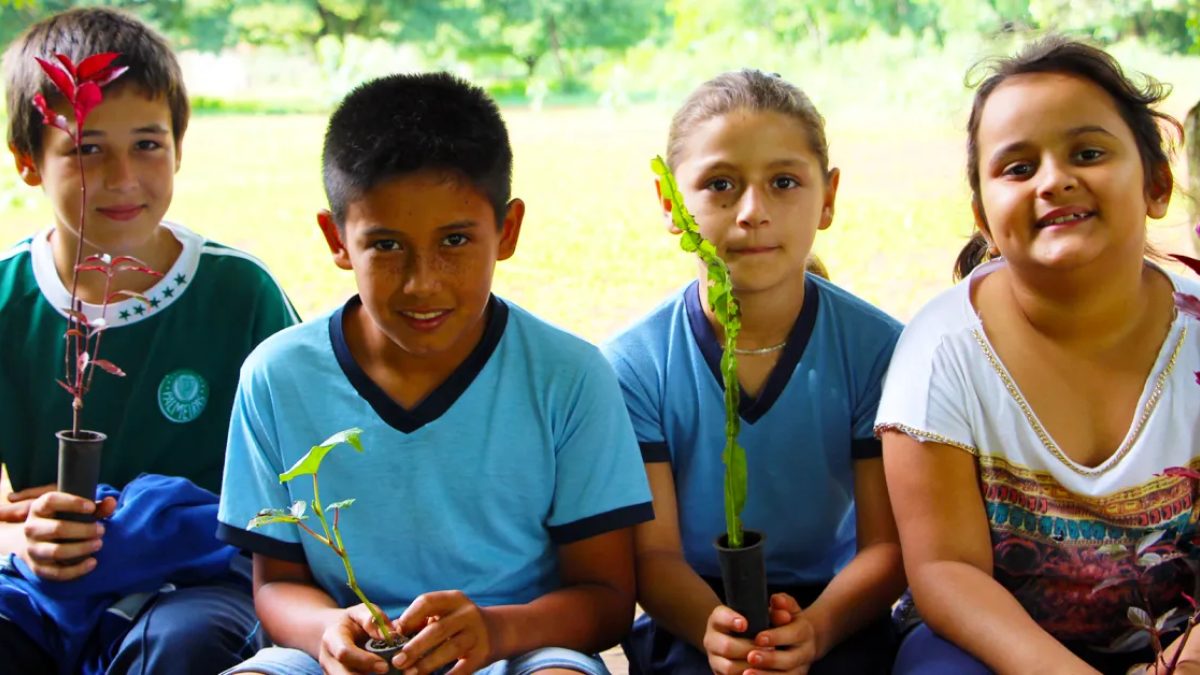
The image depicts four smiling children sitting outdoors while holding small plant saplings, effectively conveying themes of environmental education, sustainability, and community growth. While the photo is high-quality and appears authentic rather than like a generic stock photo, its lack of specific corporate branding or context makes it feel uninformative unless paired with clear messaging about the company's social impact programs.
The image shows two young boys wearing matching light blue shirts with dark collars, with a green plant stem partially obscuring the boy on the right. It appears unprofessional and low-quality due to extreme pixelation, blurriness, and poor cropping that cuts off the tops of both subjects' heads.
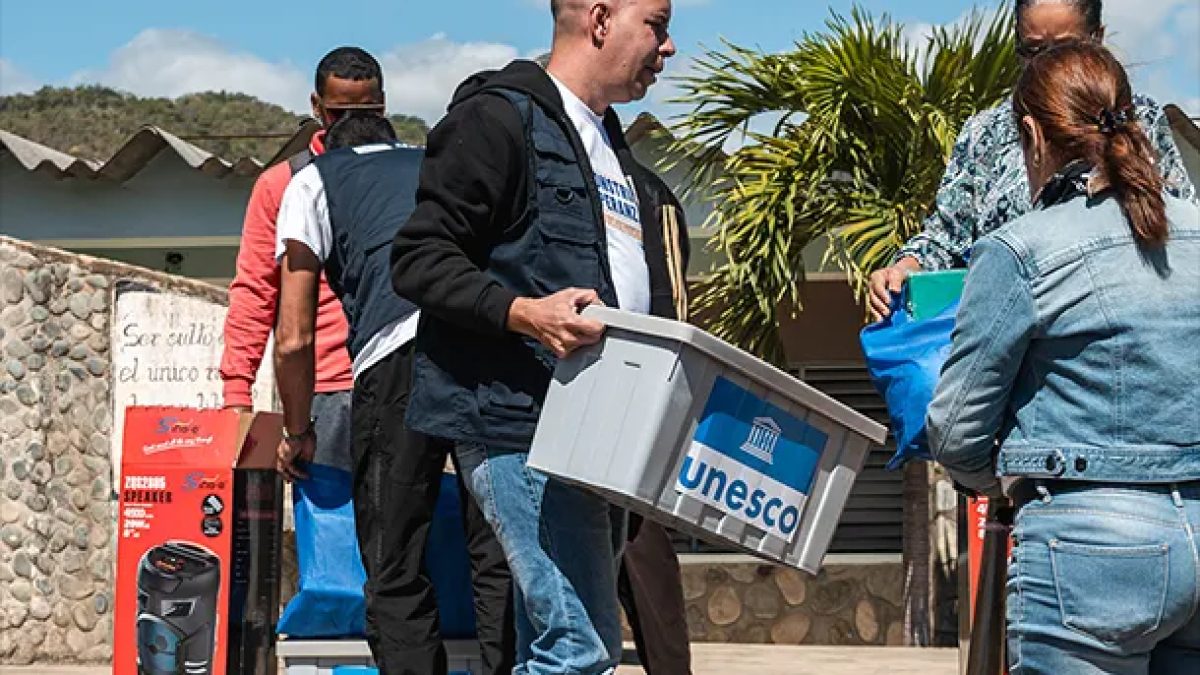
The image depicts several individuals, including a man in a UNESCO-branded vest, unloading equipment and supplies in a community setting. It appears professional and authentic rather than like a generic stock photo, effectively serving as an on-brand and informative visual that highlights the organization's field-based operations and aid work.

This image features a human hand and a robotic hand reaching toward a central glowing microchip, surrounded by digital motifs like circuit lines, binary code, and an "AI" label against a dark blue background. While the image is high-resolution and clearly signals a focus on technology, it is a very generic, cliché stock photo that lacks original brand identity and provides little specific information to a visitor beyond broad thematic cues.
Generated artifacts
llms.txt[20]
<!-- Generated: 2026-06-08 -->
# UNESCO
The United Nations Educational, Scientific and Cultural Organization’s global site for peacebuilding through education, science, culture, communication, and information.

> Intergovernmental organization covering education, science, culture, communication, and information.
> Use these pages to cite UNESCO’s mission, governance, programs, news, and major heritage designations.

## Start Here
- [UNESCO Home](https://www.unesco.org/en): Global homepage and entry point to UNESCO’s work and latest highlights.
- [About Us](https://www.unesco.org/en/about-us): Overview of UNESCO’s role, vision, and results.
- [Governance and Structure](https://www.unesco.org/en/governance): How UNESCO is organized and governed.
- [Member States](https://www.unesco.org/en/countries): Official member state information.
- [Global Presence](https://www.unesco.org/en/fieldoffice): UNESCO field offices and worldwide presence.
- [Key Data](https://www.unesco.org/en/key-data): Core facts, figures, and institutional data.

## What UNESCO Does
- [Core Functions](https://www.unesco.org/en/core-functions): UNESCO’s main functions and mandate areas.
- [Strategic Objectives](https://www.unesco.org/en/strategic-objectives): Priority goals guiding UNESCO’s work.
- [Expertise](https://www.unesco.org/en/expertise): Subject-matter expertise across UNESCO’s domains.
- [People We Serve](https://www.unesco.org/en/people-we-serve): Audiences and communities UNESCO supports.
- [Partnerships](https://www.unesco.org/en/partnerships): Partnership framework and collaboration areas.
- [Institutes](https://www.unesco.org/en/partnerships/institutes): UNESCO-associated institutes.
- [Networks](https://www.unesco.org/en/partnerships/networks): UNESCO-related networks and collaborative platforms.
- [Goodwill Ambassadors](https://www.unesco.org/en/partnerships/goodwill-ambassadors): UNESCO goodwill ambassador program.

## Programs and Designations
- [World Heritage](https://www.unesco.org/en/world-heritage): UNESCO World Heritage program overview.
- [Intangible Cultural Heritage](https://ich.unesco.org/en/): Official Intangible Cultural Heritage program site.
- [Man and the Biosphere (MAB)](https://www.unesco.org/en/mab): Biosphere reserves and the MAB program.
- [International Geoscience Programme (IGGP)](https://www.unesco.org/en/iggp): UNESCO’s geoscience program.
- [International Oceanographic Commission](https://www.ioc.unesco.org/en): UNESCO’s intergovernmental ocean science body.
- [UNESCO Lists and Designations](https://www.unesco.org/en/lists-designations): Overview of UNESCO lists and designation programs.
- [Site Navigator](https://www.unesco.org/en/lists-designations/site-navigator): Browse UNESCO-designated sites.
- [UNESCO Cities](https://www.unesco.org/en/sustainable-cities): UNESCO’s sustainable cities network and initiative.
- [UNITWIN](https://www.unesco.org/en/unitwin): UNESCO Chairs and UNITWIN cooperation program.
- [ASPnet](https://www.unesco.org/en/aspnet): Associated Schools Network.
- [Youth](https://www.unesco.org/en/youth): UNESCO youth initiatives and engagement.

## News and Publications
- [Newsroom](https://www.unesco.org/en/newsroom): Current UNESCO news and announcements.
- [Events](https://www.unesco.org/en/events): Upcoming and recent UNESCO events.
- [Articles](https://www.unesco.org/en/articles/unesco-designates-14-new-biosphere-reserves-world-environment-day): Example article page format for UNESCO editorial content.
- [Publications](https://www.unesco.org/en/publications): UNESCO publications hub.
- [UNESDOC](https://unesdoc.unesco.org/): UNESCO’s document repository and library.
- [Reports](https://www.unesco.org/en/reports): Reports and analytical publications.
- [Courier](https://courier.unesco.org/en/latest): UNESCO Courier magazine and featured stories.

## Reference and Support
- [FAQ](https://www.unesco.org/en/faq): Frequently asked questions.
- [Contact / Report Wrongdoing](https://www.unesco.org/en/ios/report-wrongdoing): Official reporting and contact channel shown in site navigation.
- [Stay Updated](https://www.unesco.org/en/stay-updated): Subscription and updates hub.
- [Careers](https://www.unesco.org/en/careers): Employment opportunities at UNESCO.
- [Fellowships](https://www.unesco.org/en/fellowships): Fellowship opportunities and programs.
- [Prizes](https://www.unesco.org/en/prizes): UNESCO prizes and recognition programs.
robots.txt[19]
# Generated robots.txt on 2026-06-08
# Purpose: Provide a sensible default policy for this site and explicitly allow tier-1 AI citation crawlers.

User-agent: *
Disallow: /admin
Disallow: /cart
Disallow: /checkout
Disallow: /search
Disallow: /api

# AI crawler access for citation and discovery
User-agent: OAI-SearchBot
Allow: /

User-agent: ClaudeBot
Allow: /

User-agent: Claude-SearchBot
Allow: /

User-agent: PerplexityBot
Allow: /

Sitemap: https://www.unesco.org/sitemap.xml
Organization[1] Schema
<script type="application/ld+json">
{
"@context": "https://schema.org",
"@graph": [
{
"@type": "NGO",
"@id": "https://www.unesco.org/en#org",
"name": "UNESCO",
"url": "https://www.unesco.org/en",
"logo": "https://www.unesco.org/themes/custom/bunesco8/assets/images/logo/logo.svg",
"description": "Learn more about UNESCO's role, vision and results. UNESCO is the United Nations Educational, Scientific and Cultural Organization. Our aim is to promote peace and security through international cooperation"
},
{
"@type": "WebSite",
"@id": "https://www.unesco.org/en#website",
"url": "https://www.unesco.org/en",
"name": "UNESCO",
"publisher": {
"@id": "https://www.unesco.org/en#org"
}
}
]
}
</script>Glossary
- Organization — the Schema.org tag that labels who the company behind the site is -- brand name, logo, social profiles
- E-E-A-T — four quality marks Google and AI tools check on a page: real-world Experience, Expertise, Authoritativeness, Trustworthiness
- Article — the Schema.org tag for an article that lists author, date and headline so AI can attribute quotes correctly
- sameAs — a tag that says "this is the same entity as my Wikipedia / LinkedIn / YouTube profile" so AI knows it is one identity
- GPTBot — OpenAI's web crawler that fetches pages for ChatGPT's search and training
- Bingbot — Microsoft Bing's crawler -- its index also feeds Copilot's answers
- PerplexityBot — Perplexity's web crawler that fetches pages for its answer-engine results
- Google-Extended — the special robots.txt token that opts your site OUT of Google's AI training without hurting normal Google search
- entity recognition — the step where AI spots that a chunk of text refers to a real-world brand, person or place
- ClaudeBot — Anthropic's web crawler that fetches pages for Claude
- FAQPage — the Schema.org tag that labels a page as a list of question-and-answer pairs that AI can quote directly
- Applebot — Apple's web crawler that feeds Spotlight, Siri and Apple Intelligence
- Q-item — a unique Wikidata ID (like Q12345) for a real-world entity -- one of the strongest ways to tell AI which company you are
- sitelinks — the indented sub-links Google shows under your top result for a brand search -- your most important inner pages
- share of voice — how big a slice of the conversation is yours compared to competitors
- citability — how easy it is for AI to pull a clean answer straight from your page
- JSON-LD — an invisible JSON block inside the page that tells search engines and AI what the page is about
- Service — the Schema.org tag that labels what a company actually offers -- audits, consulting, support
- robots.txt — a small file on your site that tells bots which pages they are allowed to visit
- llms.txt — an optional file you can add to help AI tools summarise your site
- Person — the Schema.org tag that labels a real person -- author, founder, expert -- so AI tools can tell them apart from namesakes
- entity block — a self-contained section on a page that names and describes one entity -- your company, your founder, your product
- AI citation — when an AI names your brand or site in its answer
- AI visibility — whether ChatGPT and similar AI tools know and mention your company when people ask about your topic
- discoverability gap — when Google finds you fine but AI tools like ChatGPT ignore you
- answer block — a short clear paragraph at the top that answers the question straight away
- SERP — the page of blue links Google shows for a search